|

Leading Through Change
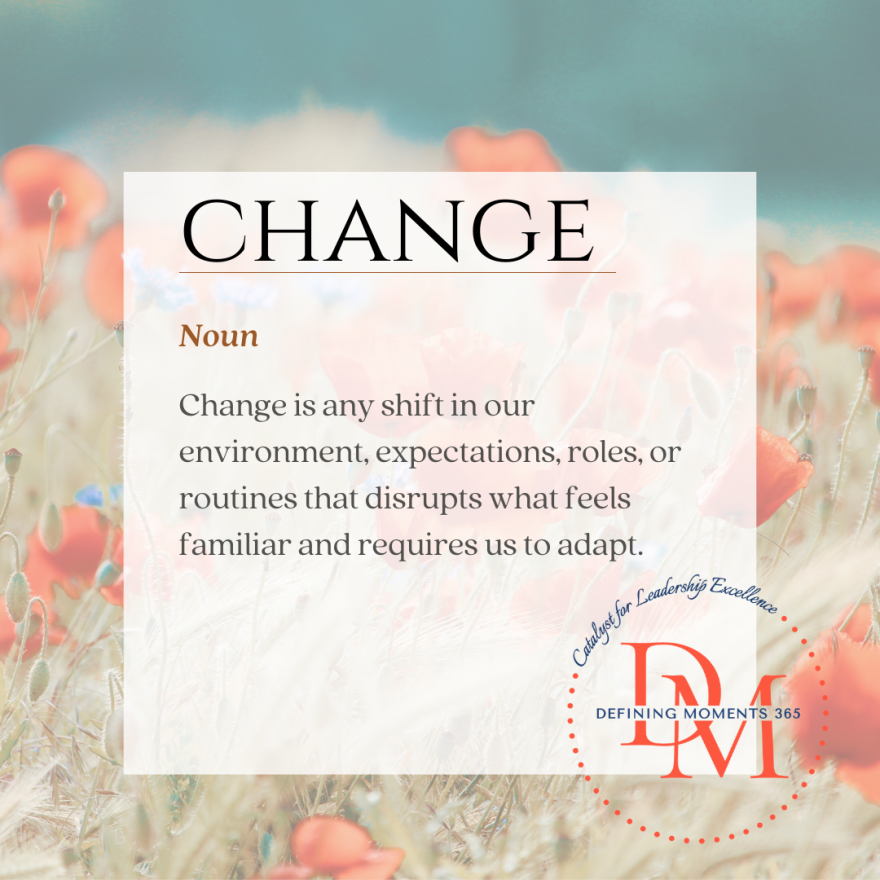
Think about a change in your life right now.
It might be a shift at work, a new leader, changing expectations, or something personal. Now ask yourself honestly: how resistant were you to that change? Did you try to stop it or avoid it? Or did you embrace it quickly? Most of us fall somewhere in the middle.
The reality is that change is constant. Priorities shift, teams evolve, and organizations adapt to new environments. Learning how to navigate change is one of the most important leadership skills we can develop.
Why Change Feels Difficult
Our bodies are wired with two competing systems when it comes to change.
One system seeks stability and safety. We naturally prefer environments that feel familiar and predictable.
But we also have an incredible ability to adapt. We can learn new skills, develop new perspectives, and adjust when conditions shift.
When change first happens, our brains often react as if we are facing a threat. Stress hormones increase, and our focus shifts into survival mode. In these moments, people may disengage, blame others, or avoid the change altogether.
These reactions are not unusual. They are a normal response to uncertainty.
The Change Curve
Many people move through a predictable pattern when navigating change.
The first stage is disorientation, where confusion, frustration, or uncertainty can show up.
Over time, people begin to reorient. Energy returns, curiosity increases, and the focus shifts toward problem solving.
Eventually, a new normal develops as people adapt and new routines take shape.
Understanding this curve helps leaders remember that resistance is often a temporary phase, not a permanent mindset.
Communicating Change Well
One of the most important leadership lessons is that how change is communicated often matters more than the change itself.
Strong change communication includes four key elements:
-
Information: clear and transparent details
-
Inspiration: a compelling vision for the future
-
Involvement: opportunities for people to contribute
-
Invariants: clarity about what will stay the same
When leaders communicate with transparency and empathy, they help shorten the resistance period and support a smoother transition.
Change is rarely comfortable, but it is often where growth happens.
As leaders, we cannot eliminate uncertainty, but we can help people move through it with clarity and resilience.
This month, consider: What change are you currently navigating, and how might you approach it differently?
Sheeba Varghese
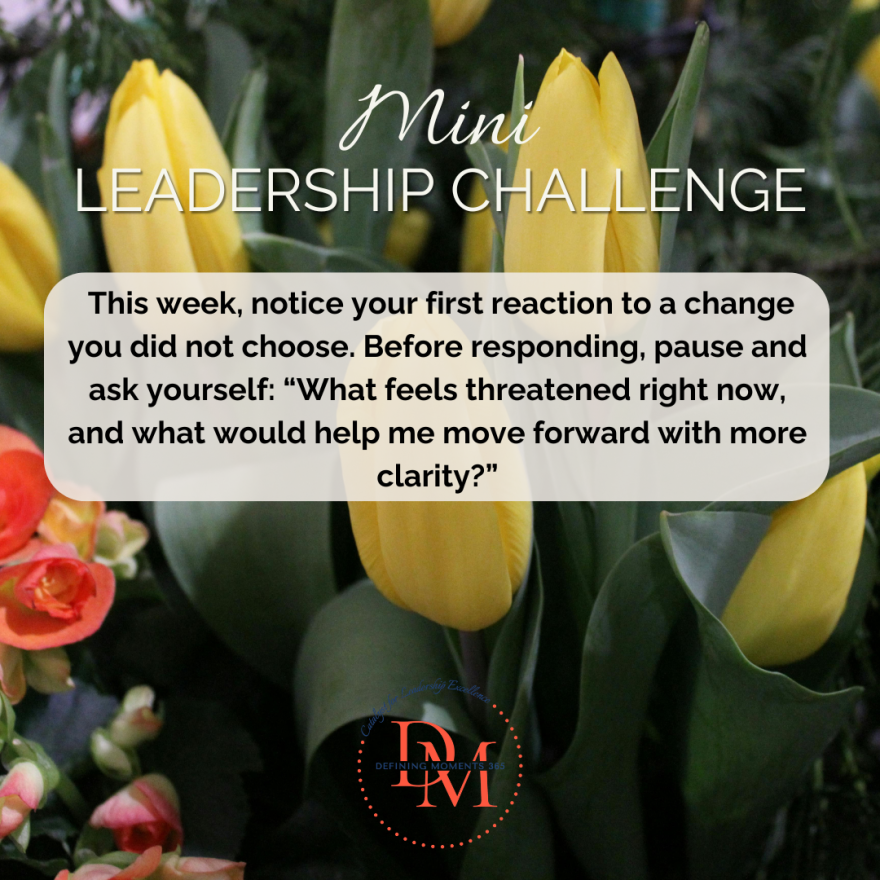
Mini Leadership Challenge:
Leading through change often starts with simply noticing our reactions. Before you move on with your week, take a moment to pause and reflect with this month’s Mini Leadership Challenge.
Leadership Spotlight: Bisa Butler
This month’s Leadership Spotlight features artist Bisa Butler, whose work reminds us that leadership can take many forms.
She is an award-winning American textile artist known for her vibrant quilted portraits that celebrate history, culture, and identity. After originally studying painting, Butler discovered quilting during graduate school and began using fabric as her primary medium. By layering colorful textiles instead of paint, she creates striking portraits that bring historical photographs and untold stories to life. Her work highlights the beauty, dignity, and individuality of her subjects and has been exhibited in museums across the United States.
Through her vibrant quilted portraits, Butler tells powerful stories about history, identity, and the human experience. Her art challenges us to see people more clearly, honor untold stories, and lead with creativity and courage.
Check out this video and learn more about her work here!

 Sheeba Varghese is a strategic partner for your talent development solutions and the author of Confidence, Clarity & Ease: A Guide For Emerging Leaders To Thrive. Her passion is to inspire and equip men and women to lead with excellence and authenticity within the spheres of influence that they are called to impact in life. The spheres may be in a home, on a team, in a classroom, among partners in a firm, or within management, to name a few. Sheeba Varghese is a strategic partner for your talent development solutions and the author of Confidence, Clarity & Ease: A Guide For Emerging Leaders To Thrive. Her passion is to inspire and equip men and women to lead with excellence and authenticity within the spheres of influence that they are called to impact in life. The spheres may be in a home, on a team, in a classroom, among partners in a firm, or within management, to name a few.
Sheeba works with:
Senior Leaders and professionals who want to develop stronger leadership skills, have impact, and move forward in their careers
Teams who want to work cohesively within their organizations
Coaches who want to renew or apply for certification with ICF
If you want to improve your leadership skills, transition from managing to leading, ensure your team is amazingly successful, increase your self-awareness, and progress your career, or aspire to be a masterful coach for your clients, then Sheeba would love to support you. She works with clients globally, both face-to-face, by phone, or by Zoom.
In her time apart from clients, Sheeba enjoys time with her husband, Santosh, and their 2 sons, Sam and Steven. She loves great movies, a good book, decorating, and dining at the wonderful restaurants in the Bay Area.
| 