|

The Power of Listening
In a world filled with constant notifications, competing priorities, and endless opportunities to speak, listening has become one of the most undervalued leadership skills. Most leaders understand the importance of communication, but effective communication begins long before we speak. It begins with listening.
Listening is not simply hearing the words. It is how we build trust, strengthen relationships, solve problems, and gain a deeper understanding of the people around us. In fact, listening is at the heart of effective leadership.
As I share in my book, Confidence, Clarity & Ease, "listening is not just a nice thing to do, it is essential and at the heart of everything we do."
When we become better listeners, we improve teamwork, strengthen relationships, reduce misunderstandings, encourage innovation, and create environments where people feel valued and heard.
Yet not all listening is the same.
Levels of Listening:
Over the years, I have found that people tend to listen at different levels depending on the context and person with whom they are speaking.
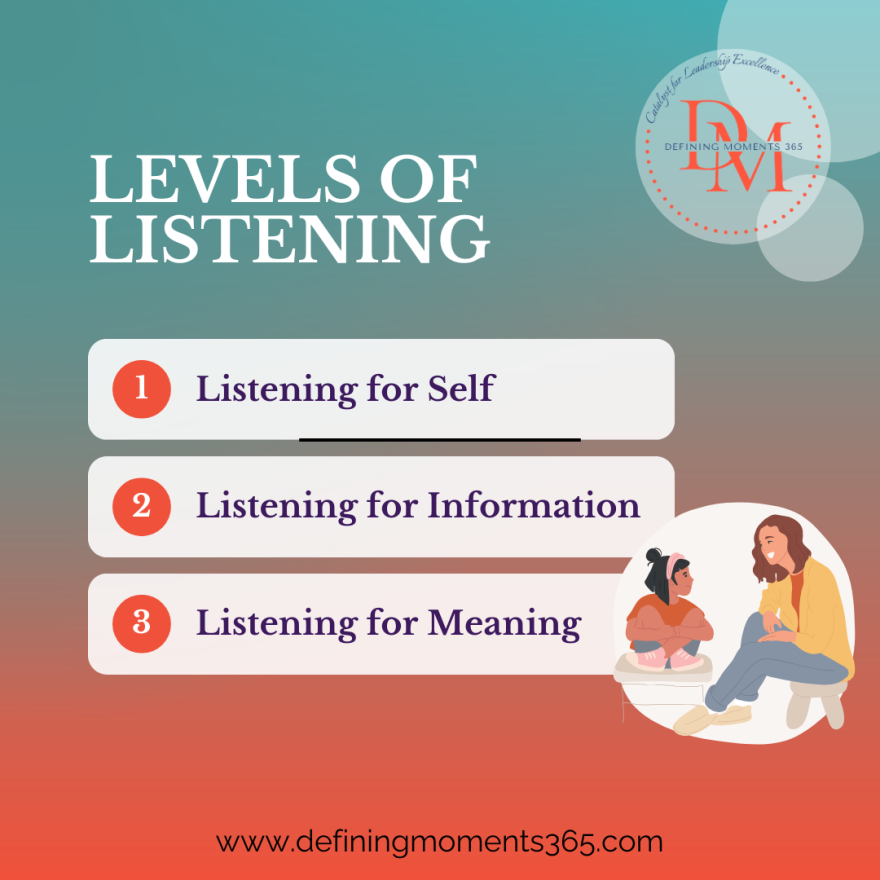
Listening for Self
This type of listening is focused on how the information affects you.
When someone is speaking, your attention quickly shifts inward. You may be wondering:
- What does this mean for me?
- How will this impact my role?
- What should I do next?
Imagine sitting in a doctor's office while receiving test results. Your focus is naturally on how the information relates to you and your future.
There are times when this level of listening is appropriate and necessary. However, when we remain here too often, we can miss important information and fail to fully understand the other person's perspective.
Listening for Information
At this level, we focus on the content of what is being said.
We listen to gather facts, learn something new, answer questions, or solve problems. This type of listening often happens during meetings, presentations, training sessions, and workplace discussions.
Many leaders spend a great deal of time listening at this level because they are responsible for making decisions and solving challenges.
While listening for information is valuable, it can still keep us focused primarily on the words being spoken rather than the deeper meaning behind them.
Listening for Meaning
This is where listening becomes transformational.
When we listen for meaning, we move beyond the words that are spoken and begin paying attention to what is underneath them.
We notice body language.
We listen for values.
We pay attention to emotions.
We become curious about what matters most to the person speaking.
As I describe in my book, at this level "you hear their heart."
Listening for meaning allows us to understand not only what is being said, but also what may not be said. Rather than preparing our response, we become fully present and genuinely curious.
This type of listening requires us to set aside our assumptions, our desire to be right, and our internal dialogue so that we can truly understand another person's experience.
The Leader's Pause
One of the greatest barriers to deep listening is our need to respond quickly.
Many of us enter conversations already preparing our next comment, defending our viewpoint, or searching for a solution.
But meaningful listening requires something different.
It requires us to pause.
To become quiet.
To get curious.
In Confidence, Clarity & Ease, I encourage leaders to remember three simple words:
Pause. Silence. Listen.
Take time to pause from the overflowing words that are competing for your attention.
Silence the conversations happening in your own mind.
Then tune your ears to understand both what is being said and what is not being said.
This practice may feel uncomfortable at first, especially in difficult conversations. Yet it is often in these moments that the deepest understanding occurs.
Reflection:
Think about your most recent conversation with a colleague, direct report, friend, or family member.
Which level of listening were you practicing?
Were you listening for yourself?
Listening for information?
Or listening for meaning?
The most effective leaders know that listening is not passive; it is active.
This month, challenge yourself to listen with greater intention.
You may discover that the most important thing someone needs from you is not your advice, your solution, or your response.
It may simply be your willingness to truly hear them.
Sheeba Varghese
Leadership Spotlight: Fred Rogers ("Mister Rogers")
This month’s Leadership Spotlight features Fred Rogers, better known as Mister Rogers. From 1968 to 2001, he welcomed generations of children and families into Mister Rogers’ Neighborhood, using television to teach lessons about kindness, empathy, respect, and understanding.
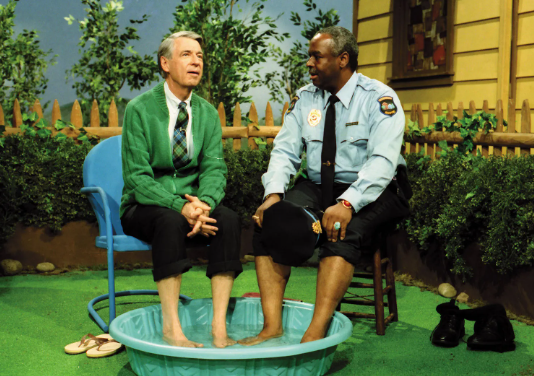
One of the things that made Fred Rogers so special was his ability to make people feel heard. He listened with genuine curiosity, spoke thoughtfully, and treated every person as if they mattered...which they did. While he may not have been a traditional business leader, his example reminds us that some of the most impactful leaders can be found in the most unexpected places.
 Sheeba Varghese is a strategic partner for your talent development solutions and the author of Confidence, Clarity & Ease: A Guide For Emerging Leaders To Thrive. Her passion is to inspire and equip men and women to lead with excellence and authenticity within the spheres of influence that they are called to impact in life. The spheres may be in a home, on a team, in a classroom, among partners in a firm, or within management, to name a few. Sheeba Varghese is a strategic partner for your talent development solutions and the author of Confidence, Clarity & Ease: A Guide For Emerging Leaders To Thrive. Her passion is to inspire and equip men and women to lead with excellence and authenticity within the spheres of influence that they are called to impact in life. The spheres may be in a home, on a team, in a classroom, among partners in a firm, or within management, to name a few.
Sheeba works with:
Senior Leaders and professionals who want to develop stronger leadership skills, have impact, and move forward in their careers
Teams who want to work cohesively within their organizations
Coaches who want to renew or apply for certification with ICF
If you want to improve your leadership skills, transition from managing to leading, ensure your team is amazingly successful, increase your self-awareness, and progress your career, or aspire to be a masterful coach for your clients, then Sheeba would love to support you. She works with clients globally, both face-to-face, by phone, or by Zoom.
In her time apart from clients, Sheeba enjoys time with her husband, Santosh, and their 2 sons, Sam and Steven. She loves great movies, a good book, decorating, and dining at the wonderful restaurants in the Bay Area.
| 