|

How Curiosity Can Change the Way We Lead
As leaders, we often feel pressure to have the answers.
Someone brings us a problem, and we want to solve it. A team member is struggling, and we want to offer advice. A decision needs to be made, and we feel responsible for knowing exactly what should happen next.
But what if some of our most powerful leadership moments begin not with an answer, but with a question?
Great questions have a way of slowing us down. They create space for curiosity, invite different perspectives, and help us understand what may be happening beneath the surface. Sometimes, the right question can move a conversation forward in a way that advice simply cannot.
From Telling to Asking
It can be tempting to jump straight into problem-solving, especially when we have experience that might help. But when we immediately provide the answer, we may unintentionally take away an opportunity for someone else to think, contribute, or grow.
Imagine a team member comes to you with a challenge. Instead of immediately saying, “Here’s what I think you should do,” what might happen if you asked:
“What do you think our next step should be?”
That simple question changes the conversation.
You are no longer solving the problem for them. You are inviting them into the process. You may discover an idea you hadn’t considered, learn more about how they think, or help them develop greater confidence in their own decision-making.
Ask to Understand, Not Just to Respond
Questions are also one of the most valuable tools we have for understanding others.
When something goes wrong, our first question might be, “Why did this happen?” But consider how the conversation might change if we asked:
“Help me understand what happened.”
Or instead of assuming someone needs more direction:
“What would be most helpful from me right now?”
The words we choose matter. A thoughtful question can communicate curiosity rather than judgment. It can help create an environment where people feel comfortable sharing what they are seeing, experiencing, and thinking.
And then comes an equally important part: listening to the answer.
Asking a meaningful question only works when we are willing to pause long enough to hear what comes next.
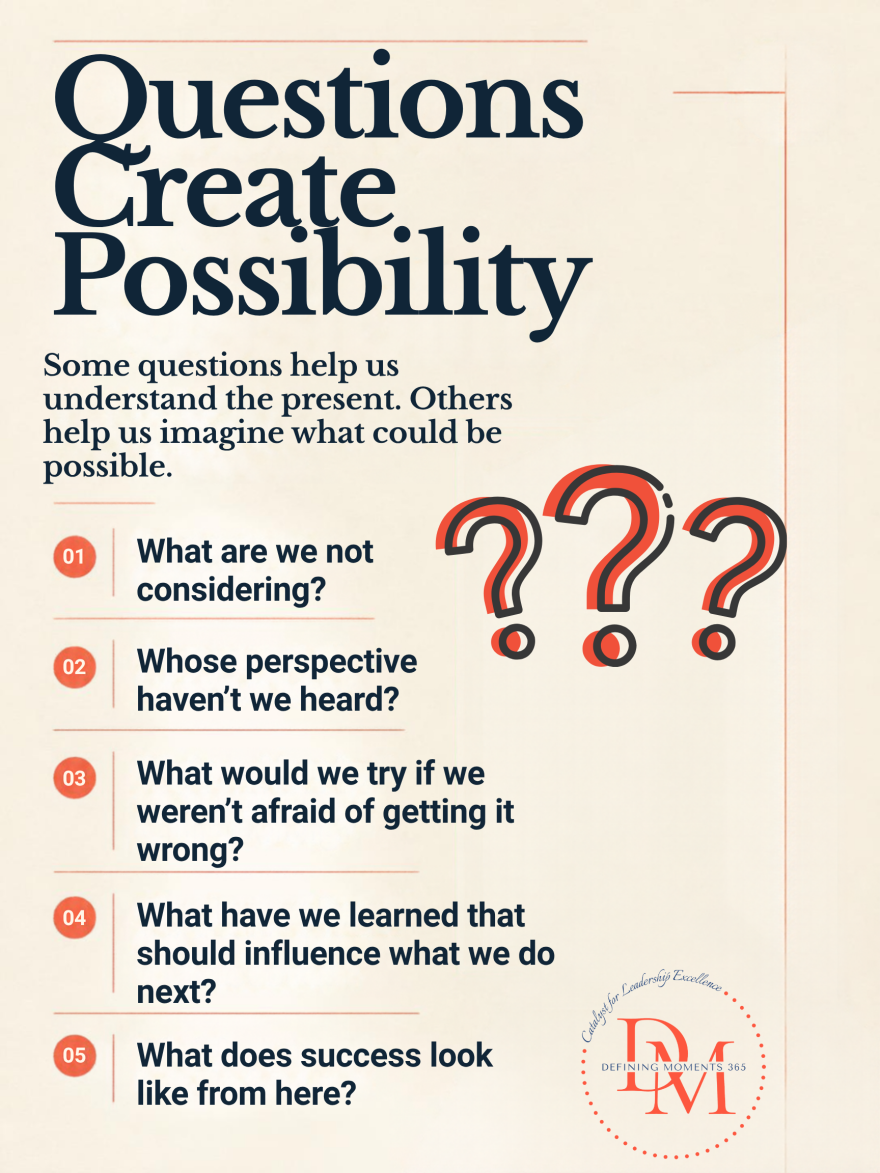
Questions Create Possibility
Some questions help us understand the present. Others help us imagine what could be possible.
What are we not considering?
Whose perspective haven't we heard?
What would we try if we weren't afraid of getting it wrong?
What have we learned that should influence what we do next?
What does success look like from here?
Questions like these can move us beyond our assumptions. They remind us that our first idea does not always have to be our final one.
You Don't Have to Have Every Answer
Leadership isn't about knowing everything.
Sometimes, leadership looks like having the humility to say, “I don't know yet. What do you think?”
There is strength in being curious. There is wisdom in seeking another perspective. And there is tremendous value in creating space for the people around us to discover answers rather than always receiving them from us.
So, as you move through your conversations this week, consider this:
Before offering an answer, is there a question worth asking first?
You may be surprised by what you learn when you simply pause, ask, and listen.
Sheeba Varghese
Leadership Challenge:
This week, in one conversation where you would normally jump in with advice, an answer, or a solution, pause and ask a thoughtful question instead.
Try asking:
“What are your thoughts?”
"What needs to change?"
“What might we be missing?”
“What would be most helpful from me?”
Then give the other person space to answer, and really listen. Pay attention to what you learn when you lead with curiosity instead of immediately providing the solution.
Leadership Resource: The Coaching Habit
by Michael Bungay Stanier
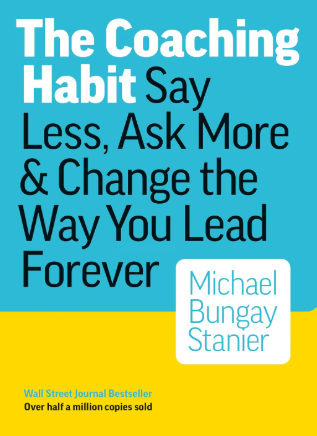
The Coaching Habit explores how leaders can spend less time immediately giving advice and more time asking questions that help others think, learn, and find their own solutions. Through seven practical questions, Michael Bungay Stanier offers a simple approach to making curiosity part of everyday leadership conversations.
One of the book’s central ideas is: stay curious a little longer and rush to advice a little more slowly.
It’s a great reminder that we don’t always have to have the answer to add value. Sometimes, the most helpful thing a leader can do is ask the question that helps someone else discover it.
Click here to grab a copy of the book!
Leadership Spotlight: Ed Catmull
As a co-founder of Pixar, Ed Catmull helped build a company known not only for creative storytelling, but also for a culture where people could challenge ideas, offer honest feedback, and keep asking how something could be better.
One of the lessons from his leadership is that great ideas rarely arrive perfectly formed. They become stronger when leaders create space for people to question, contribute, and speak honestly, even when the feedback is difficult to hear.

His story is a reminder that leaders don't always need to walk into the room with the best answer. Sometimes, our job is to create an environment where the right questions can lead us to a better one.
(Photo Source: Prhsspeakers.com)
Read more about his story here.
 Sheeba Varghese is a strategic partner for your talent development solutions and the author of Confidence, Clarity & Ease: A Guide For Emerging Leaders To Thrive. Her passion is to inspire and equip men and women to lead with excellence and authenticity within the spheres of influence that they are called to impact in life. The spheres may be in a home, on a team, in a classroom, among partners in a firm, or within management, to name a few. Sheeba Varghese is a strategic partner for your talent development solutions and the author of Confidence, Clarity & Ease: A Guide For Emerging Leaders To Thrive. Her passion is to inspire and equip men and women to lead with excellence and authenticity within the spheres of influence that they are called to impact in life. The spheres may be in a home, on a team, in a classroom, among partners in a firm, or within management, to name a few.
Sheeba works with:
Senior Leaders and professionals who want to develop stronger leadership skills, have impact, and move forward in their careers
Teams who want to work cohesively within their organizations
If you want to improve your leadership skills, transition from managing to leading, ensure your team is amazingly successful, increase your self-awareness, and progress your career, or aspire to be a masterful coach for your clients, then Sheeba would love to support you. She works with clients globally, both face-to-face, by phone, or by Zoom.
In her time apart from clients, Sheeba enjoys time with her husband, Santosh, and their 2 sons, Sam and Steven. She loves great movies, a good book, decorating, and dining at the wonderful restaurants in the Bay Area.
| 